Thursday, May 23, 2013

Digger Dog


Digger O'Dell in his first home

      In the little city of West University Place, surrounded by the big city of Houston, my down-the-street neighbor was a PhD who taught at Rice University.  Another PhD lived next door.  On the other side lived a lawyer who was married to a lawyer. Four other lawyers lived on my block, along with two stockbrokers and an architect.  Having grown up in Lubbock, I knew the value of diversity and learned to look beneath the surface for inner beauty in everyone. In spite of their obvious shortcomings,  I became friends with these strange people.   That made me feel really good about myself.
     Dr. Rudolph P. Nydegger, the Rice professor, allowed me to call him Rudy.  I taught him how to barbeque and play dominoes and he tried out big words on me.  I’ll never forget when he discovered “bourgeois.”  He used it in every other sentence for two weeks.
     My friend Rudy was a bit quirky.  He wanted a dog as a companion for his five-year-old daughter, Ashley, and he wanted an Irish Setter.  I suggested that Irish Setters were large dogs and needed running room and our yards were relatively small, especially the fenced back yards.  I should have known better than to try to be logical with Dr. Nydegger, because he had seen a picture of an Irish Setter in a magazine and his mind was made up.  In a week or so, he brought home a registered Irish Setter puppy to live in the back yard and play with Ashley.
     Rudy named this new dog “Digger O’Dell,” after an undertaker on an old-time radio program.  The big red dog grew quickly and immediately began to live up to its name.  Within a few months, Digger dug under the fence at will and roamed the neighborhood while Ashley was at school and her parents were working.  Digger was far too bright and quick for the West U. animal control officers, and he always came home for dinner.
      Almost a year later, as I supplemented my income by playing poker with Rudy and some of his Rice friends, Rudy said, “Jim, your dad lives on a farm.  Do you suppose he might like a dog?"
     My parents had “retired” to a 250 acre farm outside Vashti, Texas, near Bowie.  Dad had fifty head of cattle and mother tended a garden and raised chickens.  They had gone back to their roots and were very happy.  Dad was partially crippled, but he managed to get around with a cane, and could still fix anything that broke.  He had to sit in a chair to do it, but he rebuilt the transmission on his John Deere tractor.  Turns out, he had always wanted a good dog.
     Dad drove the four hundred miles to Houston one Saturday and I nervously took him to meet Digger.   As Dad and I walked down the sidewalk to the Nydegger’s house, Rudy and Digger stood on the front porch.  Dad wobbled along with his cane and Digger headed for us.  The dog ignored me, but approached Dad with his head lowered, submissive, tail wagging wildly.  Dad was past the point of squatting or hunkering down, and the big dog sensed that; he stood on his back legs so dad could pet him.  No need to be nervous, it was love at first sight for both of them.  Digger happily ran around in circles and Dad cleared his throat several times.  When I wasn’t looking, he wiped away a tear.
     The next morning, after breakfast, Dad drove his Ford pickup down the street to Rudy’s house.  He hobbled out and held the door open.  Without hesitation, Digger darted from the porch past Rudy and me, bounded into the front seat of the pickup, and sat up on the passenger side.  Dad climbed in, cranked up the truck and headed north.  He told me later that after about a hundred miles, Digger lay down with his head in Dad’s lap and took a nap.
     From that day forward, they were inseparable.  Dad drove to the pasture to feed the cattle, and Digger Dog ran alongside.  Digger flushed quail and dove and chased them as he ran through the underbrush, but was always there waiting when Dad stepped out of the truck.  As Dad finished his chores and climbed back into the pickup, Digger, hot and tired, jumped in ahead of him and pawed the air conditioner, asking for it to be put on high speed.  He stuck his head in front of the vent and let the cold air blow directly into his face.
     Digger Dog did not chase cars.  His favorite thing to chase was birds.   One day, he flushed a covey of quail from the bar ditch next to the paved road that ran alongside the farm.  A neighbor lady was driving by and Digger, chasing a bird, darted in front of her.  Dad rushed him to the vet in Bowie.
     Digger’s left front leg was mangled and the tendons controlling it were severed.  The young vet said, “This dog is going to be crippled.  We will have to put him down.  There’s no other choice.”
     “By God, I’m crippled and I ain’t gonna be put down!  You figure out a way to fix him, boy,  and I don’t mean maybe.  Don’t you let my dog die.”   Dad was as serious as a heart attack.
     The operation took over two hours.  Digger’s entire leg was removed at the shoulder joint, and the skin where it had been was patched and sewn up.  Once Dad explained the gravity of the situation, the vet did a thorough job.
      Digger Dog recovered completely and was a three-legged Irish Setter for the rest of his long and happy life.  Beautiful silky red hair covered the wound and it was invisible.  The last time I visited the farm, Digger chased birds across the pasture as Dad and I fed the cattle.  Then he jumped in the pickup between us and pawed the air conditioner with his single front leg.
     

Wednesday, May 1, 2013

Nothing Much Ever Happens in Muleshoe

    
My oldest two grandsons at the Mule Monument in Muleshoe.  Note the Lowake Steakhouse tee shirt on Ian.  I am doing my best to introduce the boys to the finer things in life.

     Muleshoe, Texas, is near the New Mexico border, about eighty miles northwest of Lubbock and that makes it fair game for this blog.  I have lifelong friends in that part of Texas—friends who have never, ever bored me.  That’s about all I really expect from friends—let me enjoy your company and please don’t bore me.
     In Muleshoe, most everyone is a farmer.  Those who don’t farm are involved in some business that caters to the needs of farmers.  Some of the farmers own businesses in addition to their farms.  Charles Flowers told of one guy there who owned a furniture store.  Flowers was concerned with the mark-up on furniture—farmers are always concerned with everyone else’s mark-up.  Charlie said, “The store sets there empty, with not a single customer in sight, and Ole Willie Isaac has paid for three farms with it.”
     Muleshoe farmers, as all farmers everywhere, work hard most of the time but a lull in their activity comes after the crops are harvested and before spring planting.  Annual maintenance is necessary on every farm, and this is a really good time to repair equipment, paint barns, fix windmills, and drink whiskey.

A second picture of my grandsons in Muleshoe--the grain elevator is just to the left , next to the railroad track.
     In downtown Muleshoe, the S.E.Cone Grain Elevator stores grain sorghum from the harvest.  Ralph Abernathy is the manager there and his busy time coincides with the local farmers, as does his slow time.  My friends, Buck Campbell and Charles Flowers, enjoy loitering around the elevator office during the slow spells each year.  They like this because their wives think they’re off working and they won’t have to paint the house, or plant shrubs, or whatever chore the little woman can come up with to make sure they don’t get into some kind of mischief.
     The elevator office is a big open room, with a long counter across the front near the entry door, a large conference table behind the counter next to Ole Ralph’s desk, and a coffee machine with several heavy cups on a little cabinet in the corner.  Buck and Flowers grab a coffee cup and sit down at the big table.  Ole Ralph pulls out a half gallon of Black Jack from the bottom drawer of his desk and fills all three cups.  Then, they let nature take its course.
     After several cups, and the mandatory discussion of the prospects of rain, the idiot politicans in Washington, and the shape of the new gal at Tom’s Satellite Lounge in Clovis, the boys get restless.  Maybe it is time to go back over to Clovis and see if they really are that big.  If so, they need to go pick up Ole Benton.  Robert Benton, a friend from high school, farms a couple of sections west of Dimmit and is a swell fellow to get drunk with.  Ole Ralph puts a sign in the window indicating that he is at the doctor’s office in Lubbock and will be open tomorrow.  The well-used sign is almost worn out, old and dog-eared.
    After spinning by Benton’s farm and learning that he is playing golf in Dimmit, the boys head toward the golf course, Buck driving his wife’s Cadillac.
     There are reasons that you have not seen the Dimmit Country Club on the Sunday afternoon broadcasts of the PGA Tour.  To start with, it has only fourteen holes.  The developer ran out of money and never finished the course.  No one in Dimmit seems to mind and several young people from there were astonished when they went off to school and discovered eighteen holes on the Texas Tech course in Lubbock.
     Then, the topography in Dimmit leaves something to be desired when compared to other links.  The Ole Boy who built it had only a small Caterpillar, and he simply scraped up some dirt to make the greens, planted grass on them and quit.  The places where he scraped the dirt became natural sand traps, and there is absolutely no danger of any water hazard in that part of the world.  They planted fourteen trees, one for each hole, but the drought took them.  All except one.  One got cut down when it blocked a shot for Ernie Nydegger.  Ole Ernie just went to his pickup and got a chain saw and cleared a path to the green.  The rules out here are pretty liberal.
     Our boys, having the foresight to bring along the Black Jack and coffee cups, were feeling no pain.  They looked out across the course and immediately spotted Benton and another fellow, easing their golf cart up to the twelfth tee.  Buck took the direct route to the tee box, bounced across three parched fairways and a small sand trap, slid sideways on the cart path and stopped next to the little mound.  This attracted the attention of the two golfers.
     “Benton, put up that six iron and get in here.  We’re going to Clovis and run the whores.  You ain’t got a hair on your ass if you don’t come on with us.”
     Ole Benton nervously held up both arms and said, “Boys, boys.  Hold on, hold on.  Allow me to introduce our new minister.”
     Buck put the Cadillac in low gear and cut a donut in the rock-hard fairway.  As they sped away, Ole Ralph leaned out the back window and shouted, “Baldy.”
As the sun sets slowly in the west, we leave the peaceful little farm community of Muleshoe.

Saturday, April 20, 2013

Sam Houston and the Battle of San Jacinto April 21, 1836


     One hundred seventy-seven years ago today, in 1836, Sam Houston slept late.  His army, such as it was, was camped in the San Jacinto woods about a mile from Santa Anna’s troops.  The Mexicans had been awake all night, shoring up their defenses, feverishly preparing for an expected dawn attack by the Texians.  Houston slept until the sun was high in the sky.  He just didn’t feel like getting up early and starting a fight in the swamp.  Whether this decision was based on military brilliance, blind luck, or a massive hangover is a matter of debate.  I suspect the latter.
     At three that afternoon, Houston’s head felt better and he led his troops across the mile of bald prairie separating the armies.  The ensuing battle lasted eighteen minutes and changed the history of the world.  For a detailed account, go to my blog post “Texas History #3, The Battle of San Jacinto,” dated March 30, 2012, and the later post “Texas History #4, Peace in the Valley,” dated April 8, 2012.
      By the way, April 21st is San Jacinto Day, not Texas Independence Day.  Texas’ inept legislature, after wrangling for five months, declared independence from Mexico on March 2, 1836,  That is our Independence Day.  Then, four days later, the Alamo fell on March 6,  and Texans remember that day, but don’t celebrate it.  On Palm Sunday of that year, March 27th, Santa Anna had all the prisoners at Goliad massacred, except for twenty-seven that ran away in the smoke and confusion and forty-four others that sweet little Panchita saved.  Read about her in my Blog, “Francisca Panchita Alavez” on December 14, 2012, and “The Angel of Goliad” on December 20. 2012.  Stick with me—in the words of my friend Ken Black, “I’ll put you under the Big Top.”
     At the time of the Battle of San Jacinto,  Mexico owned present day Texas, New Mexico, Arizona, California, Nevada, Utah, Colorado, and part of Wyoming.  Britain had its eye on California and the whole west coast.  Spain wanted to retake all of Mexico. France was open to expansion just to keep up with England.  In the United States, especially among the “slave states,” there was a growing desire to expand west to California.  “Manifest Destiny” was already on the minds of some politicians.
     Sam Houston and Santa Anna agreed to the “Treaties of Velasco,” which the Mexican government immediately denounced.  International law was on the Mexican side, for no leader was allowed to negotiate while in captivity or under duress.  This technicality did not deter the two opium smokers.  Houston and Santa Anna blissfully smoked dope and worked out a treaty which gave both men what they wanted.  Texas was ceded to the rebels under Houston and Santa Anna was not strung up from the “Which Way Oak.”

     Edward Burnet, the provisional president of Texas, actually signed the treaties with Santa Anna while Houston was recuperating from his wounds in New Orleans.  In a private treaty, Santa Anna also agreed to work for the recognition of Texas independence inside Mexico, and the establishment of the border at the Rio Grande.  Mexico was not about to agree to any of this and Santa Anna himself was not serious.  He would have signed anything to escape execution by the revengeful Texians.
     Because of turmoil inside the Mexican Government, the little Republic of Texas was allowed to survive.  Given a stable government, the Mexicans would have immediately invaded Texas and put an end to silly notions about independence.  Instead, Mexico issued an ultimatum to the United States.  They said, in diplomatic terms, “We still own Texas and do not recognize the Republic of Texas.  We will take action against these upstarts as soon as we get our stuff together.  In the meantime, if you try to annex or otherwise acquire the territory of Texas, it means war.” 
      Andrew Jackson wanted Texas, but he didn’t want war with Mexico.  The northern states didn’t want Texas, a slave state, in the union.  America kept adding new states, Mexico continued internal squabbling, and the cash-strapped Republic of Texas tended its business while nervously watching its southern border.  That border, incidentally, was difficult to watch.  It was considered to be the Nueces River by Mexico and the Rio Grande River by Texas.
     Mexico, under Santa Anna, invaded Texas a couple of times in the next few years.  The attempts were half-hearted, Santa Anna was struggling to stay in power, and the Mexican supply lines were long and easily broken.  Santa Anna’s dream of reconquering Texas was thwarted;  he was put out of office and condemned to death.  Lucky for the United States, he was exiled instead. 
     Almost ten years after San Jacinto, Texas joined the Union and war with Mexico became imminent.  Santa Anna quietly made a private deal with the United States.  He needed help to get back into Mexico and into power, and he agreed to sell Texas and other Mexican holdings to the United States at bargain prices in exchange for that help.
     After the United States declared war in May of 1846, Santa Anna wrote the president of Mexico, Valentin Gomez Farias, saying he no longer had any desire to be president and offering his services as leader of the army to fight the Americans.  The desperate (and not too bright) Farias allowed him back into the country and made him a general.
     Once back in Mexico and head of the army, Santa Anna reneged on both deals.  He took over the Mexican Government, named himself president, vowed to run the Americans out of Mexico and retake Texas.  He didn’t keep those promises, either.  General Zachary Taylor and the Texas Rangers won the war with relative ease.
      The dust settled in 1848, and the United States stretched from sea to shining sea.  The Gadsen Purchase, in 1854, straightened America’s southern border and fleshed out Arizona and New Mexico.  America had some problems with the pesky British in the Pacific Northwest, but essentially, the Mexican/American War of 1846 defined the boundaries of the continental United States.
     I need to point out the obvious, because everyone doesn’t always see the obvious.  Andrew Jackson, John Tyler, James Polk, or any other American president of the time could not have acquired all this territory without Texas.  Had Sam Houston not prevailed at San Jacinto, no one can say what the United States might look like today.  Texas provided the spark that started the war, and, as much as Zachary Taylor disliked them, the Texas Rangers were instrumental in winning it.
       Without the efforts of the great state of Texas, it is patently obvious that Disneyland today might well be in Anaheim, Mexico, and the Mormons live around Salt Lake City, Mexico.  If you see a Texan, it wouldn’t hurt a thing if you yankees were to say, “Thanks!”  In fact, that’d be real nice.  We’d all be much-abliged.

Sunday, April 14, 2013

The HEB Diet


The West Entry of my HEB Store.  This door marks the starting point.

     I have wrestled with a weight problem most of my adult life.  I enjoy eating and have from an early age, which has contributed to my ongoing battle with bulges.  After watching Oprah and The View on TV, and learning that nothing is really my fault, I discovered that the root cause of my life-long obesity was my psychotic mother.   
     Mother grew up in East Texas on a red dirt, dry-land farm in the midst of the Depression.  During those Dust Bowl years, everyone was hungry and, consequently, skinny. Mother wanted fat babies.  In her eyes, well-fed babies were healthy babies and she worked to make her babies fat, happy, and healthy.  My poor mother equated love with food and she loved her children.
     No meal at our house was complete without potatoes and bread.  We had biscuits for breakfast, light bread for lunch, and corn bread for dinner.  We enjoyed foreign foods--German Fries in the morning and French Fries at dinner.  Everything was fried in lard until Mom got on a health kick and started using Crisco.  Fried chicken and chicken fried steak were staples, and mother loved us so much, she always cooked extra and insisted we have seconds.
     It is refreshing to know that I can blame Mom’s psychosis for my problems, especially when she is not here to defend herself.  I have learned I am not just a weak-willed fatso, I have a “Food Addiction” and it is not my fault.  I have dealt with this addiction by employing a series of diets.  Over the years, I have lost several hundred pounds and have put back on several hundred and thirty-four pounds.
     My latest diet is one I call the HEB Diet, after my favorite supermarket.  The HEB (Here Everyone’s Beefy) Diet is simple.  I eat a light breakfast, a good lunch, and a light dinner.  Typically, I have plain oatmeal for breakfast, salad for lunch and a small piece of broiled fish for dinner--total calories maybe 1200 to 1500.  This sounds boring, and it is, so I liven it up by visiting the HEB Store.
     The HEB Diet gives me the bonus of being able to eat anything in the store that is available as a free sample.  Rules are I cannot buy and eat anything, nor can I steal and eat anything, but I can avail myself of everything offered as a free sample.  This innocent little twist adds variety, color and interest to an otherwise boring and mundane routine.
     At the HEB Store, I like to start at the west entry, near the produce area.  I circle around by the station where they make guacamole.  The little girl will give you a small container with a tostada and some fresh guacamole, or a little cup of orange juice.  (Some days she squeezes fresh orange juice.)  Check around the apples and oranges too—they sometimes slice one up and put it out for people to taste.  The cheap ones are not sliced up—only the Fujis or Honey Crisps for $3.98 a pound.

Free Panini Sandwiches and Pizza sometimes adorn this counter.
     I generally move over toward the sandwich bar and check for samples there.  Sometimes bite-size bits of melted-cheese Panini sandwiches are available, or if you’re lucky, pepperoni pizza samples.  The store employees don’t monitor how much you sample.  Check out the center aisle—for about a week they had Jordan Almonds—I sampled several handfuls every trip.  My, my, they are tasty.

The Roast Beef is a bit rare, but the cheese is good.
     On top of the olive display are little plastic cups.  Use these to sample anything in the olive bins.  I like the little sweet red peppers and mozzarella, but the kalamata olives and pickled garlic are also excellent.  Any of these temper the sweetness left over from the Jordan Almonds.
     Moving on down past the deli, I check for samples of roast beef and cheese, perched on little acrylic-covered islands.  Even though the beef is a bit rare for my taste, the price is right.  I stab two or three pieces of meat and four or five chunks of smoked Gouda on one of those long toothpicks.   Next in line, the pastry department usually has cut-up cinnamon rolls, cookies, or brownies available on little islands.  After all that roast beef and cheese, something sweet for dessert goes well.

Artisan Breads.  Note sample box in center.
     In the bread department, up on the slanted shelves with the artisan breads, little boxes hold bread samples.  I prefer the cranberry walnut loaf, but the Asiago cheese bread is really good.  Again, no one seems to care how much you sample, but get there early.  The cut up bread dries out quickly.
     Around the corner, past the gooey pastry case and glass-doored frozen fish display, look around for the sweet, well-endowed blond lady with perfect teeth.  She’ll be passing out wine samples from a little table.
     “This here's a new Pie-not Nore from out in California.  Would jew like a taste?”
     I take a sip and say, “It is nice, robust, and fruity, but it slides off the palate a bit quickly.  Could I have a bigger sample to see if it will cling?”
     She looks suspicious.  “I’ll have to ask my supervisor.  What’s a pal-ate?”
     Meanwhile, at the Cooking Connection, old Jim, looking silly in a black chef’s hat, is combining an eight-dollar jar of Tortilla Soup Mix with a two-dollar can of Rotel Tomatoes. He calls that “cooking.”  He’ll be happy to give a sample to anyone he doesn’t recognize. 
      He recognizes me, and frowns.  I grab a chunk of ciabatta bread from the display on his counter, dip it in olive oil and keep moving.  I like Jim, but he acts like he owns the store—takes all the fun out of free samples.
     Unless the red-haired lady is cooking sausage wraps on an electric skillet, or the Asian guy is pushing sushi, there are no more samples until the island in front of the dairy cases.  Another little acrylic station there sports mixed nuts, or trail mix, or dried cranberries.  A good handful of any is really filling.
     Turn right here—no sense in going into the dairy aisle—nothing free there.  At the end of the gondola on the right are the specialty cookies.  Almost always, Chocolate Chip Galore cookies are provided as samples.  These are really good.  I hear they were once featured in a James Bond movie.

The rice cake exploder gun is in the background, next to the lie about prices.  Almond butter in foreground.
     Straight ahead, at the front of the store, on the left, is a table with exploded rice cakes and almond butter.  Sometimes I like to start here and do the tour in reverse, but ending a meal with guacamole and pizza is awkward, so I usually go clockwise.  Skipping around to get everything in proper order takes a lot of effort and, with only 1500 calories a day, I don’t need the exercise.
     Funny thing.  As careful as I have been, so far I haven’t lost any weight.  In fact, I gained four pounds last week.  Maybe I should cut out the oatmeal.  If only Mother had been mentally stable…but then, I guess we can all say that.

Friday, March 15, 2013

How Texas became the Lone Star State--Continuing a Series on the Women of Texas

Joanna Elizabsth Troutman designed this flag and made it from silk skirts
    
  Joanna Elizabeth Troutman was born in Crawford County, Georgia, February 19, 1818.  At age twenty-one, she married Solomon L. Pope and they lived comfortably on the plantation “Elmwood,” near Macon, for the rest of their lives.  Joanna and Solomon had four sons.  After Solomon died in 1872, Joanna married W.G. Vinson, a Georgia Legislator, in 1875.   She died in July of 1879, and was buried in the family plot at Elmwood, next to her first husband.
     Why is there an oil painting of this demure Georgia girl hanging in the Rotunda of the Texas State Capitol?  Why is the only statue of a woman in the Texas State Cemetery a life-size bronze of this Georgia teenager who never set foot in Texas?  How and when was her body moved to Texas? Why?
     The short answer to these questions is Joanna Troutman first identified Texas as the “Lone Star State.”  A single star appears on the great seal of Texas because of Joanna.  She is the reason a lone star dominates the Texas Flag and appears on all official state correspondence.  Even though she never saw Texas, she loved the idea, the spirit, the romance of it.  She loved the thought of brave young men fighting for freedom, giving their lives for an ideal, making a better world.  Joanna, hopelessly idealistic and incurably romantic, loved Texas.
     When she was seventeen, Miss Troutman lived with her parents in Knoxville, Georgia, not far from Macon.  Her family owned and operated the Troutman Inn, a hotel on the main road from Macon to Columbus. The family lived a half-mile away, on top of Mulberry Hill in a spacious frame home with a wrap-around porch on three sides.
      “Texas Fever” was sweeping over Georgia in 1835.  Letters from William B. Travis, exaggerating the difficulties imposed upon the colonists by Mexican despots appeared in the local newspapers, along with requests from Sam Houston for men and money to fight tyranny.  Reports of the first shots being fired at a place called Gonzales dominated the local newspapers during October.  The brave Texans defied an order to return a small cannon to the Mexican Army, inviting them, with a homemade flag, to “Come and Take It.”
     Joanna heard from travelers at the inn about a “Texas Rally” held in Macon on November 14, and a fiery speech made by her friend, Lt. Hugh McLeod.  McLeod, a recent graduate of West Point, was on his way to his first duty station.  The young lieutenant resigned his commission in the U.S. Army and joined the Macon Grays to fight in Texas.  The fact that he was last in his class at West Point may have influenced his decision to resign from the army, or he could have been afflicted with an especially bad case of "Texas Fever."
      This generation of young men in the south had grown up hearing war stories.  Their grandfathers had fought in the Revolutionary War and their fathers had battled in the War of 1812.  They wanted this war.  They needed this war.  Their legends and their fortunes would be built in Texas.  The spell of Texas was magic and they could not resist it.
     The evening after hearing about the rally in Macon, young Miss Troutman sat on the big wrap-around porch at the family home and looked up into the night sky.  She was too excited to sleep, thinking over and over about the brave young men going off to Texas.  If she were only a man, she would go and fight the Mexican tyrants.   As she sat there, she noticed an unusually bright star, rising from the horizon.  Being much brighter than any other star, it dominated the sky with a clear, blue-white light that over-powered its neighbors.  Joanna compared it to Texas, shining alone in the dark, fighting for independence.  Suddenly, she knew what she would do.
     For the next two days, Joanna and her girlfriends commandeered an upstairs bedroom at her family’s inn.  They ripped apart two silk skirts and a petticoat and sewed a flag that Joanna had designed in her mind as she watched the lonely star.  Joanna put a blue, five-pointed star in the middle of a white silk field with the words “Liberty or Death” on one side and a Latin phrase meaning “Where Liberty Dwells, There is My Country,” on the other.   Nothing about the finished flag looked homemade.
     On November 19, as three companies of Texas-bound Macon Grays marched through Knoxville, Joanna stood on the steps of Troutman Inn and presented the battle flag to Major William Ward, asking him to accept it for Lt. Hugh McLeod and fly it as they went into battle.  The crowd cheered and several young men from Knoxville joined the volunteers, then and there.  One who joined was John Turner Spillars.
     Ward first flew the flag over Velasco—present day Freeport—on January 8, 1836.  When the Georgia Battalion moved to Goliad, under command of James Fannin, the flag was the first to fly over the fort after Fannin heard the Texas legislature had declared independence from Mexico.  Because of improper handling, the flag was shredded by its halyard.  The shreds were left hanging, perhaps fittingly, while the Goliad Massacre took place.
     John Turner Spillars was one of only two of the Macon Grays at Goliad to escape the massacre and eventually return to Georgia.  When the Mexicans started killing prisoners, John was lucky and quick enough to run away in the confusion.  Lt. Hugh McLeod was detained in Louisiana while his resignation from the U.S. Army was processed, and this delay saved his life.  McLeod, not a favorite of Houston's, missed the fight at San Jacinto, but enjoyed a long military career in Texas.
     William Ward and virtually all the young Georgia volunteers died at Goliad.  Most were not given the honor of dying in battle, but were among the three hundred fifty marched out and shot down in a pasture on Santa Anna's orders.
     Little more than a month later, Houston’s army defeated and captured Santa Anna at San Jacinto and the war was over.  Among the spoils, Houston captured the silver chest of the high-living General Santa Anna.  He arranged to send a place setting from the chest—an oversize fork and spoon—to Miss Joanna Troutman as a thank you for the flag she contributed to the Texas cause.  Her descendants still own and treasure these pieces, and the letter from General Rusk that accompanied them.
The sculpture marking Joanna's grave in the Texas State Cemetery
     Thirty years after her death, Joanna's sister-in-law, Mrs. John Troutman, Sr., noticed Joanna’s untended grave in the overgrown and neglected family plot.  She contacted Texas Governor Oscar Colquitt, a Georgia native, and made him aware of the situation.  Knowing of Joanna Troutman's contributions to Texas, Colquitt immediately responded, and, as a result of his efforts, in 1913 her body was moved to Austin and buried with honors in the Texas State Cemetery.   An oil painting of her at seventeen, working on the flag, was commissioned and placed in the State Capitol.  In 1919, Pompeo I. Coppini finished an eight-foot bronze statue of Joanna, and placed it near her grave.  Coppini’s other work includes the Littlefield Fountain on the Austin Campus of the University of Texas.
       In 2011, two Georgia historians visited the planetarium at the Museum of Arts and Sciences in Macon, Georgia.  With the aid of a computer program called “Stellarium,” they were able to roll back 176 years, and view the night sky as it appeared from their location on November 15, 1835.
       Sunset occurred at 6:30 that night and two prominent stars appeared; Vega, in the west, a part of the constellation Lyra, and Capella in the east, a part of the constellation Auriga.  About 9:30, the planet Jupiter and the star Rigel, of the constellation Orion, started to rise from the eastern horizon.  In 1835, all of these were easily visible from Joanna’s wrap-around porch.
     The museum professional assured the historians that Joanna would have seen virtually the same sky any night within ten days either side of November 15, 1835.  The three men agreed that the planet Jupiter was, without question, the most dominate light in the sky and almost certainly the inspiration for Miss Troutman’s flag, and for the Lone Star of Texas.
     Other flags bearing one star have flown over Texas, some of them much earlier than January 8, 1836.  In 1818, the filibuster group headed by Dr. James Long carried a red and white flag similar to the United States flag, with thirteen red and white stripes and a single white star in a red field.  In September of 1835, Sarah Bradley Dodson designed and sewed a flag for Texas similar to the French Tri-Color.  It consisted of three equal vertical stripes, blue, white, and red, with a white star centered in the blue stripe.   This flag is believed to have flown over the Alamo.
The painting of Joanna in the Texas Capitol
      The De Zavala Flag, a single white star on a blue field with “Texas” spelled between the points of the star, may have been used briefly, but the first official flag, approved by the Texas legislature on December 10, 1836, was the Burnet Flag, a single white star in the center of a blue field.  This flag was identical to Joanna’s flag, with the letters deleted and the colors reversed.  On January 25, 1839, a sketch of a Red, White, and Blue Lone Star Flag done by Dr. Charles B. Stewart was approved and adopted by President Lamar and the Republic of Texas legislature, and is still in use.  Today, the flag that evolved from a Georgia teenager’s imagination is recognized all over the world. 


Sunday, February 24, 2013

William Barret Travis--On This Day In Texas History


     Willian Barret "Buck" Travis' dreams came true in Texas. In little more than four years, he established himself as a prominent attorney with a long and prosperous client list.  He paid all the debts he owed in Alabama. Travis allowed his estranged wife, Rosanna, to file for an uncontested divorce and he was engaged to a wealthy Texas planter’s daughter, Rebecca Cummings.  His son, Charles Edward, was staying with his friend, David Ayers, so Travis could visit often.  Just as his personal life was taking a brighter turn, war clouds were gathering, and revolution was in the air.
     In June of 1835, Travis led an attack on Velasco and Anahuac, called the “Second Anahuac Disturbance.”   In October, he  rushed to Gonzales just in time to be too late for the “Come and Take It” battle.  He was known in the colonies as a “War Dog,” a name given to those colonists activively promoting war with Mexico. He was not a land promoter or real estate developer as were Jim Bowie, Ben Milam, the Wharton brothers, and most other War Dogs.  Travis, with with a vast knowledge of contemporary romantic literature, but no military experience, made inflammatory speeches, held rallies, recruited volunteers, and generally encouraged rebellion.
     Henry Smith, Governor of Texas and a close friend, appointed Travis lieutenant colonel of the cavalry in the Texas army.   Smith asked him to recruit one hundred men and go to the aid of William Neill, the commander of the Alamo in Bexar.  Travis found less than thirty volunteers to go with him to San Antonio, but when they rode up on February 3, 1836, they were welcomed.  He knew Jim Bowie, and they became better acquainted at this time.  Within a few days, Davy Crockett appeared with a few volunteers from Tennessee.
     Bowie and Travis clashed over who should be in charge.  Travis had little military experience, and Bowie was an acknowledged warrior.  Travis gave speeches, wrote letters, and read books while Bowie fought duels, battled Comanche, and skirmished with Mexicans.  The dispute was settled with a compromise.  Travis would command the regular army troops and Bowie would lead the volunteers.  Davy Crockett refused any kind of leadership role.  He just came to play the fiddle, sing a little bass, and help out with the Mexicans.  He asked to be a "high private."
     Crockett did play the fiddle.  The night of February 22, the defenders of the Alamo felt danger from Santa Anna and his troops sufficiently remote to allow a party to celebrate George Washington’s Birthday.  Crockett played the fiddle, Travis danced with the senoritas, and Bowie, suffering from an unknown malady possibly connected to his alcoholism, stayed in bed.  The celebration of Washington’s Birthday was a strictly American event, but, with a nod to the Tejanos present, enchiladas and tamales were served and the party became a fandango.
     Travis and Bowie ignored reports that Santa Anna’s advance party, General Ramirez y Sesma and fifteen hundred men, had crossed the Rio Grande and was closing on San Antonio.  The reports, brought by Tejano scouts, were discounted because the Tejanos were mistrusted.  On the morning of February 23, as Travis walked to the Alamo from his quarters at the Plaza de Las Yslas on Potrero Street, he noticed wagonloads of Tejanos heading out of town.  He learned that General Sesma and his troops were at Leon Creek, less than five miles away.
     Travis placed a lookout in the bell tower of San Fernando Cathedral, the tallest structure in Bexar, with instructions to ring the bell when the enemy was sighted.  After conferring with Bowie, Travis busied himself issuing instructions for improving the Alamo’s flimsy fortifications.   At three o’clock in the afternoon, Sesma’s troops were sighted, a mile from town.
     From the diaries and journals of other Mexican officers present at the time, General Sesma was held in contempt by his peers for his failure to attack when he reached San Antonio.  If he had done so, on the morning of the twenty-third, he would have almost certainly overrun the hastily constructed, shoddy fortifications at the Alamo, and would have little trouble conquering the unprepared, hung-over Texians.  His delay made the siege inevitable, and cost the lives of hundreds of Mexican soldiers.  The indecision of General Sesma gave Travis time to reinforce the fortifications of the ancient church, and made heroes of a group of adventurers who would have otherwise died in oblivion.  It also gave time and impetus for Travis to write one of the most stirring letters in history.
     Buck Travis, aware he and his men could abandon the Alamo as Sam Houston urged, chose to stay and fight.  Travis chose death for himself and convinced 180 men to die with him.  On February 24, 1836, Buck Travis became William Barret Travis, as he wrote the following letter:
                     The People of Texas and All Americans in the World:
Fellow citizens & compatriots
     I am besieged, by a thousand or more of the Mexicans under Santa Anna—I have sustained a continual Bombardment & cannonade for 24 hours & have not lost a man—The enemy has demanded a surrender at discretion, otherwise the garrison are to be put to the sword, if the fort is taken—I have answered the demand with a cannon shot, & our flag still waves proudly from the walls—I shall never surrender or retreat.  Then, I call on you in the name of Liberty, of patriotism & of everything dear to the American character, to come to our aid with all dispatch—The enemy is receiving reinforcements daily & will no doubt increase to three or four thousand in four or five days.  If this call is neglected, I am determined to sustain myself as long as possible & die like a soldier who never forgets what is due to his own honor and that of his country—Victory or Death.
William Barret Travis
Lt. Col. comdt.
P.S. The Lord is on our side.  When the enemy appeared in sight, we had not three bushels of corn.  We have since found in deserted houses 80 or 90 bushels & and got into the walls 20 or 30 head of Beeves.             Travis

      Travis’ “Victory or Death” letter was written 177 years ago today. Travis sent the letter by Albert Martin, one of the scouts who came and went from the Alamo with impunity during the siege.  Two days later, he sent “El Colorado” Smith, another scout,  with a letter for Rebecca Cummings and another to David Ayers for Travis' son, assuring the boy that his father had died for his country.  The “Victory of Death” letter was received at Washington-on-the-Brazos but the Texas government, flat broke, in confusion and disarray,  could do nothing to help Travis and his men.  It is obvious that Travis intended the letter for all Americans, not just the rebels in Texas, and it was published in newspapers all over the United States after the fall of the Alamo. 
     On March 2, 1836, the Texas legislature did take action.  They adopted an American style Declaration of Independence, and declared themselves free of Mexican rule.  On March 6, Santa Anna stormed the Alamo, and, as promised, put all 189 defenders to the sword.
     The original copy of Travis' Letter was delivered to the Alamo today by armored truck, from its resting place in Austin.  It will be on display at the Alamo until March 7th, thirteen days, representing the thirteen days of seige.  The letter is back at its place of origin for the first time since Albert Martin took it from Travis and rode away into the night, one hundred-seventy-seven years ago today.  Take two minutes and listen to the letter as read by that great Texan, Willie Nelson.   Just click on this link:  http://www.youtube.com/watch?v=Q43iuWIjJUU
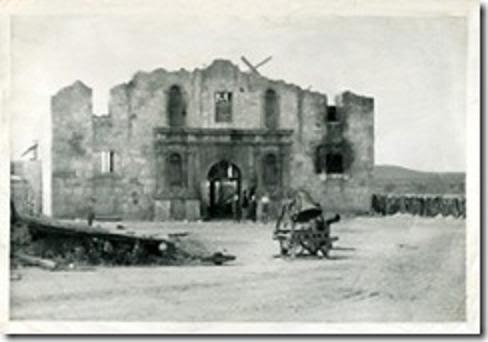
Brave men died at the Alamo.  The world learned of it because of William BarretTravis. (Actually this is a photo of the Alamo replica used in the John Wayne movie.  This one is located near Brackettville, Texas.  The two outside windows on the second floor did not exist at the time of the battle.  They were added by the U.S. Army in 1846, along with the iconic arched facade.)

Thursday, February 7, 2013

William Barret Travis

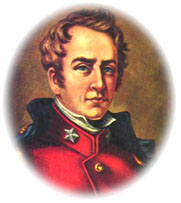
A sketch of William Barret Travis in 1835 by Wiley Martin.  This sketch was done barely three months before Travis' death during the fall of the Alamo.
    
        I have been working on other things and have neglected this blog.  I apologize, but I have nothing new written.  I will, instead, insert a character study I did on "Buck" Travis some time ago.  I pick him up as an adult in Alabama and follow him to Texas in this piece.   If I can get it done, this will be in the "Readable Texas History Book" that I plan to write.  Most history books I've read are written by PhD's and the language is so stilted I have to read every sentence three times to decipher the meaning and it puts me to sleep.  When I get my book finished, no one will think a PhD wrote it.
      William Barret Travis was born in South Carolina and moved with his family to Alabama when he was nine.   Young William disliked the idea of becoming a farmer, so he applied himself diligently to his education.  He read voraciously, worked tirelessly at his studies, and became a teacher, lawyer, and newspaper publisher.  He also became a Mason, fathered a child, and married one of his students, all before he was twenty years old.
      Travis was born on August 9, 1809, and was inducted as an apprentice into the Alabama Lodge #3, Free and Accepted Masons in June of 1829.  He recieved a Fellowcraft Degree in July and became a Master Mason in August of 1829.  Because the Masons have strict policies about age, Travis must have lied about being twenty-one.  If so, it would not be the last time--he lied to Stephen F. Austin about the same thing.
     Even though Travis was a talented writer, his newspaper suffered from lack of advertisers.  Claiborne, Alabama, wanted a newspaper, and Travis wanted the prestige of being the editor of a successful paper, but the paper floundered.  His law practice also floundered.  William and his lovely wife, Rosanna, were not getting along.  No matter how hard Travis worked, debts were mounting and there were  lawsuits pending.  The young man was miserable.
     William and Rosanna Cato Travis were living beyond their means.  They were supporting themselves, the baby Charles Edward, and three slaves.  The slaves were borrowed, but had to be fed and maintained.   Possibly Travis endured this expense to cater to the beautiful Rosanna’s need to be “the lady of the house.”  She was not a good housekeeper, being barely eighteen, immature, spoiled, and pregnant with her second child.  
      Travis had no quarrel with the idea of marital fidelity, so long as it applied to the female partner.  He could stray if he wished, but if his wife sought satisfaction elsewhere, he got all bent out of shape.  Rosanna had a friend, Samuel Cloud, and Travis questioned their relationship.  William suspected Rosanna had strayed and worried that the child she carried was not his.  Life was complicated in Alabama.
     Eight months after his twenty-first birthday, William Travis kissed his pregnant wife goodbye, mounted his horse, and left for Texas.  The court ruled against him on the debts and shortly a warrant would be issued for his arrest. He promised to return for Rosanna and the children when he could afford to support the family.  He rode out of Claiborne, crossed the Alabama River on the ferry, and headed west, never to return.    
      William Barret Travis had much time to think on his trip west from Alabama.  From his youth, he read romantic novels, Sir Walter Scott, Shakespeare, and stories of bigger than life heroes, doing good and righting wrongs.  Travis felt as if he had another chance at life and he would do it right this time.  He would be a dashing, romantic character.  Naturally, he would become wealthy, but on the way, he would live and dress flamboyantly, ride the finest horses, seduce every available woman, play cards and gamble.  He would be a raconteur, welcome at every party, telling stories, weaving tales and holding his audience spellbound.  Travis would fascinate people with his vast knowledge, deep intellect, and quick wit.  He would have the love of beautiful women and the respect of honest men.   He was twenty-one years old and his mistakes were behind him.  He would call himself "Buck."
      Texas was as good a place as any to get started.